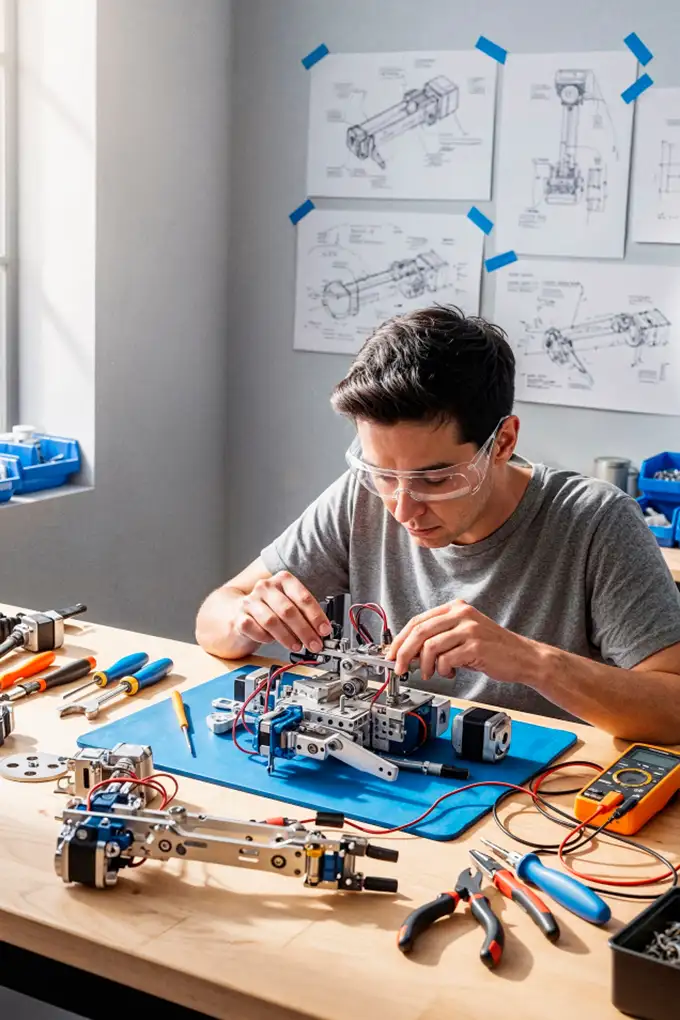
With rapid advancements in miniaturization, precision manufacturing, and high-performance electronics, micro engineering has emerged as a cutting-edge and future-focused engineering discipline. The ability to design and manufacture components at micro and nano scales is critical across industries such as semiconductors, medical devices, automotive electronics, robotics, aerospace, and consumer electronics. Across Europe, demand for micro-engineered products continues to rise, driven by smart technologies, automation, and next-generation electronic systems.
Micro engineering focuses on the design, fabrication, testing, and integration of micro-scale components and systems, combining principles of mechanical engineering, electronics, materials science, and physics. Micro engineers work with technologies such as micro-electromechanical systems (MEMS), micro-sensors, micro-actuators, precision machining, lithography, and clean-room manufacturing. Their expertise enables the development of compact, efficient, and highly reliable systems that power modern digital and industrial applications.
Germany is globally recognized as a leader in micro engineering, precision engineering, and advanced manufacturing, supported by its strong industrial base and world-class research ecosystem. The country is at the forefront of innovation in microelectronics, MEMS technology, semiconductor manufacturing, optical systems, and precision instrumentation.
German universities and research institutes maintain close collaboration with industry, ensuring that micro engineering education is highly practical, research-driven, and aligned with real-world technological requirements.

 Malaysia