
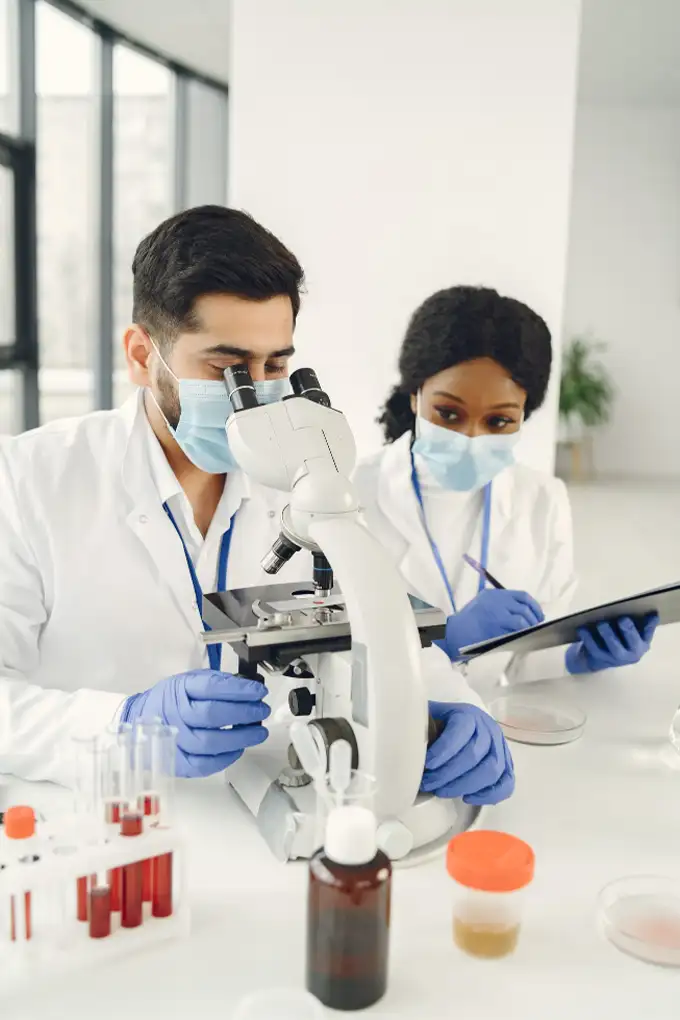
Biochemistry is a core life-science discipline that explores the chemical processes underlying living organisms, forming the foundation of modern medicine, biotechnology, pharmaceuticals, and molecular research. With Germany renowned for its strong research ecosystem, advanced laboratories, and leadership in life sciences, studying biochemistry in Germany offers students rigorous scientific training combined with hands-on research exposure. Students develop expertise in areas such as molecular biology, enzymology, metabolism, genetics, proteomics, and bioinformatics.
Studying Biochemistry in Germany—including Bachelor’s and Master’s degree programs—is highly attractive to international students due to Germany’s emphasis on research-driven education and innovation. German universities focus on laboratory-intensive learning, experimental research, data analysis, and interdisciplinary collaboration, enabling students to apply biochemical principles to real-world challenges in healthcare, pharmaceuticals, and biotechnology.
To study Biochemistry in Germany, students must meet academic qualifications equivalent to the German Abitur or recognized secondary education, along with program-specific eligibility requirements such as strong backgrounds in chemistry and biology and language proficiency depending on the course. Germany follows internationally recognized degree structures and research standards, making its biochemistry qualifications globally respected and academically competitive.
For studying in Germany

Every study program, whether it is Masters in Germany or any other course, has its own study conditions and curriculum.