
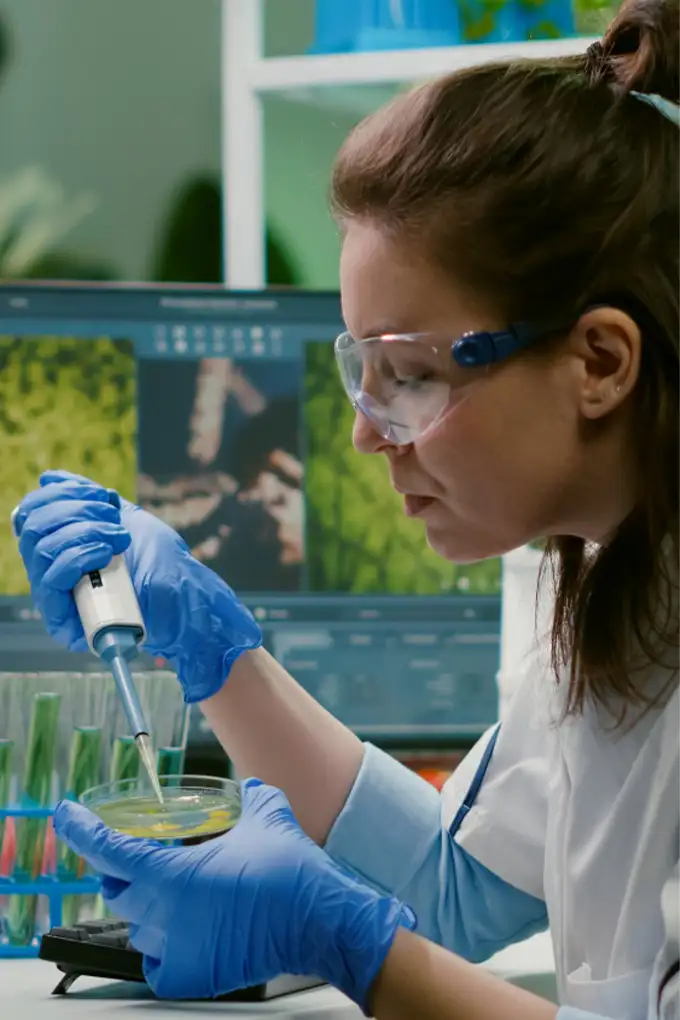
Biotechnology is a fast-growing, innovation-driven discipline that applies biological systems and advanced technology to develop solutions in healthcare, agriculture, industry, and environmental sustainability. With Germany recognized as a global leader in life sciences, biomedical research, and industrial biotechnology, studying biotechnology in Germany offers students a strong blend of scientific excellence, cutting-edge research, and real-world application. Students gain expertise in areas such as genetic engineering, molecular biotechnology, bioinformatics, bioprocess engineering, pharmaceuticals, and medical biotechnology.
Studying Biotechnology in Germany—including Bachelor’s and Master’s degree programs—is highly attractive to international students due to Germany’s research-oriented education model and strong industry integration. German universities emphasize laboratory-intensive training, research projects, interdisciplinary collaboration, and industry internships, enabling students to apply biotechnological principles to real-world challenges in medicine, agriculture, and sustainable industrial production.
To study Biotechnology in Germany, students must meet academic qualifications equivalent to the German Abitur or recognized secondary education, along with program-specific eligibility requirements such as strong backgrounds in biology, chemistry, and mathematics, and language proficiency depending on the course. Germany follows internationally recognized degree structures and research standards, making its biotechnology qualifications globally respected and academically competitive.
For studying in Germany

Every study program, whether it is Masters in Germany or any other course, has its own study conditions and curriculum.